A toddler who grabs a toy or forgets to say “thank you” is still learning, not failing a manners test. Social skills grow through patient modeling, repeated practice, and the reassurance that you are on their side.
Our printable positive parenting eBook offers a resource for families with toddlers and preschoolers who want to encourage respect and empathy. In the meantime, you can start with small moments that already happen throughout your day.
Start with connection and simple expectations
Young children learn social skills gradually. A preschooler might remember a polite phrase at breakfast and forget it by lunchtime, especially when emotions run high. Rather than expecting instant results, offer short, age-appropriate reminders and plenty of chances to try again.
Choose a few phrases that fit your family’s routines, such as “please,” “thank you,” and “May I have a turn?” Let your child hear you use them with family members and other people. You might say, “Thank you for passing the napkins,” or “May I have a turn with the blanket?” Your example shows what the words sound like in a real interaction.
Connection matters, too. Get close, speak calmly, and describe what you want your child to do. “Please put the cup on the table” gives clearer direction than a lecture about being polite. You can guide respectfully without demanding an apology on the spot or expecting your child to get every interaction right.
Practice manners during familiar routines
You don’t need a formal lesson to practice kindness. Meals, playtime, errands, and greetings offer opportunities to show your child how people communicate and care for one another. Keep prompts brief, and give your child time to respond.
| Situation | Skill to model | Gentle prompt |
|---|---|---|
| Asking for a snack | Making a polite request | “Let’s try asking, ‘May I have some, please?’” |
| Playing with a shared toy | Taking turns | “Your friend is using it now. Let’s ask for a turn.” |
| Receiving help | Expressing appreciation | “That was helpful. We can say thank you.” |
| Someone feels upset | Noticing feelings | “They look sad. What could we do to help?” |
Notice the effort, even when the interaction is imperfect. You might say, “You waited while your sister finished her turn,” or “You noticed that your friend was sad.” Specific encouragement helps your child understand which action was thoughtful, rather than simply hearing that they were “good.”
For greetings, offer choices that respect your child’s comfort. A wave, a smile, or a simple “hello” can all be friendly ways to acknowledge someone. There is no need to insist on a hug or expect a shy child to carry a conversation.
Respond gently when manners are hard
Hunger, tiredness, and excitement can make it harder for young children to pause and use the words they know. If a child shouts for a snack, take a breath and name the situation: “You’re hungry, and you want a snack.” Then offer an alternative: “You can say, ‘Snack, please.’” Help them meet the need rather than turning the moment into a standoff.
If a toy is grabbed, calmly stop the grabbing and help the children navigate the turn. You could say, “Sam is using it. Let’s ask when it will be your turn.” Staying nearby can make it easier to support both children while they practice waiting.
Once everyone is calm, revisit the moment through play or a short conversation. Stuffed animals can practice asking for a toy, or you can wonder together what might help next time. The goal is learning without shame, not replaying a mistake to make your child feel bad.
For more age-specific ideas, the CDC’s positive parenting tips and HealthyChildren.org’s guidance on young children’s behavior offer helpful starting points.
Use a printable guide to support your routine
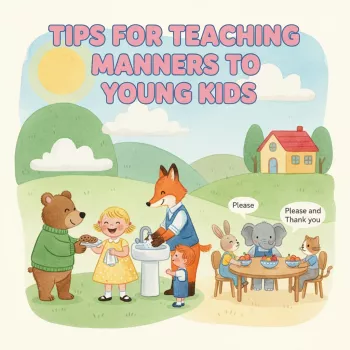
Our Tips for Teaching Manners to Young Kids printable eBook is a digital resource focused on positive parenting, respect, empathy, and social skills for toddlers and preschoolers. It is listed at $45.99 and is available for purchase on the product page.
To make practice manageable, choose one skill at a time. If you start with asking for a turn, model the phrase during play for several days and notice your child’s attempts. When it becomes more familiar, you can introduce another skill, such as thanking someone for help. Adjust your expectations to your child’s development and keep the routine flexible.
For a separate resource on communication in digital spaces, you can also explore our Digital Literacy for Everyday Life guide, listed at $7.99. It covers topics including online communication etiquette and safe internet use; it is not a substitute for the young children’s manners guide.
FAQ
When can children start learning manners?
Toddlers can begin observing and practicing simple polite behaviors, such as waving hello or saying thank you. Keep expectations appropriate for your child’s development and offer patient reminders.
How can I teach manners without forcing an apology?
Acknowledge the other person’s feelings and model a sincere apology yourself when appropriate. Then help your child find a suitable way to make things right, such as helping rebuild a knocked-over tower.
Is this manners guide a physical book?
No. Tips for Teaching Manners to Young Kids is a printable digital download, not a physical book.